
Whoa!
I installed three browser wallets this week and played with each for a few hours.
My first impressions of UI speed and backup flows surprised me.
Initially I thought all wallet extensions felt roughly the same, but then a couple of small workflow differences revealed what actually separates secure multi-chain wallets from the rest.
Something felt off about seed phrase prompts in one of them (somethin’ subtle).
Really?
Yes — seriously, the differences matter for real funds.
As a DeFi user I’ve locked and moved hundreds of thousands in value over time.
On one hand the convenience of automatic network switching is great, though actually that convenience can create attack surface when a malicious dApp triggers switches to obscure chains with low monitoring and expensive exit routes.
My instinct said pay attention to permissions and RPC endpoints.
Hmm…
I also watch how a wallet displays token approvals.
A clear approvals manager saves you time and grief.
Initially I thought that approvals UI was mostly cosmetic, but then after tracing an exploit vector where phony approvals were hidden behind truncated addresses I realized that design details actually change how easily an average user can fall for a scam.
That turned into a real aha moment for me.
Whoa!
Security isn’t just about cryptography or keys; it’s about usable flows and honest defaults.
Good defaults are very very important and reduce risky manual steps.
Another important axis is multi-chain support: wallets that aim to be ‘multi-chain’ often do so by bundling chains, but if they lack per-chain RPC validation or chain ID checks then they can be tricked into signing transactions under false assumptions.
That particular detail is often quietly overlooked by reviewers.
Seriously?
Yep, and the worst mistakes come from trust by laziness.
A multi-chain wallet must clearly show which chain you’re using and make switching explicit.
I used a wallet where a dApp requested signatures and the UI showed only the token symbol without the chain context, which meant an approval intended for a testnet could be crafted into something malicious on a low-liquidity chain.
User education helps, but design should carry most of the burden.
Something felt off about…
Wallets also vary in how they handle private key backups and device linking.
Some provide encrypted cloud sync, others stay local only.
On one hand encrypted sync is convenient for users who switch devices frequently, though actually those systems require zero-knowledge proofs and careful threat modeling because a misconfigured sync can become a single point of failure.
If you’re privacy-minded and value control, local-only storage is generally preferable.
Why I picked a multi-chain extension I can trust
Okay, so check this out—
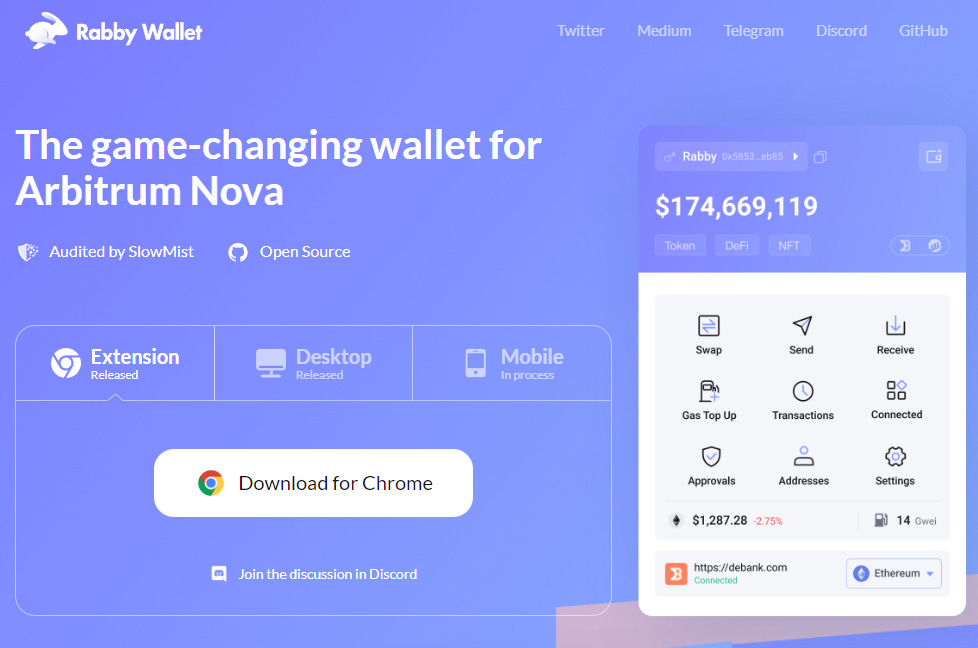
I’ve used rabby for weeks and the approvals manager helped me spot bad requests.
The chain badges and explicit switching eliminated confusion for me.
Initially I thought the UX was just polish, but then after intentionally simulating a malicious dApp that tried to obfuscate chain context I realized those small visual cues and forced confirmations stopped a plausible phishing flow.
I’ll be honest, I’m biased toward tools that favor safety over cleverness.
I’m not 100% sure, but…
For power users, custom RPC validation and hardware wallet support are non negotiable.
For newcomers, fewer prompts and clearer language reduce mistakes.
On one hand you want frictionless flows to move quickly between networks and DEXs, though actually adding explicit friction at signing time has repeatedly prevented significant losses in my own testing and in incident reports I reviewed.
So pick a multi-chain extension that shows the chain, asks for approvals, and limits automation.
FAQ
How do I evaluate a multi-chain wallet quickly?
Check three things fast: visible chain indicators, a readable approvals manager, and clear backup instructions; try a malicious-request simulation (in a safe sandbox) to see if the UI makes you pause or blindly approve.
